
AI in Diagnostics at Arab Hospitals: Promising Projects, Still Limited Scientific Evidence
The Core · TL;DR
- Hospitals in the UAE and Saudi Arabia, such as King Faisal Specialist Hospital and Al Qasimi Hospital, have begun trialing AI systems for imaging analysis and early detection of diseases like Alzheimer's and strokes, but most remain launch-phase projects rather than completed clinical approvals.
- No published studies have yet been found that clearly compare AI accuracy with doctors' performance inside Arab hospitals, as a Saudi study published in February 2026 did not provide specific accuracy figures.
- The UAE and Saudi Arabia have early regulatory frameworks in place, including the Dubai Health Authority's 2021 policy and SDAIA's 2022 AI ethics principles, both of which require maintaining human oversight and prohibit AI from replacing physicians' decisions.
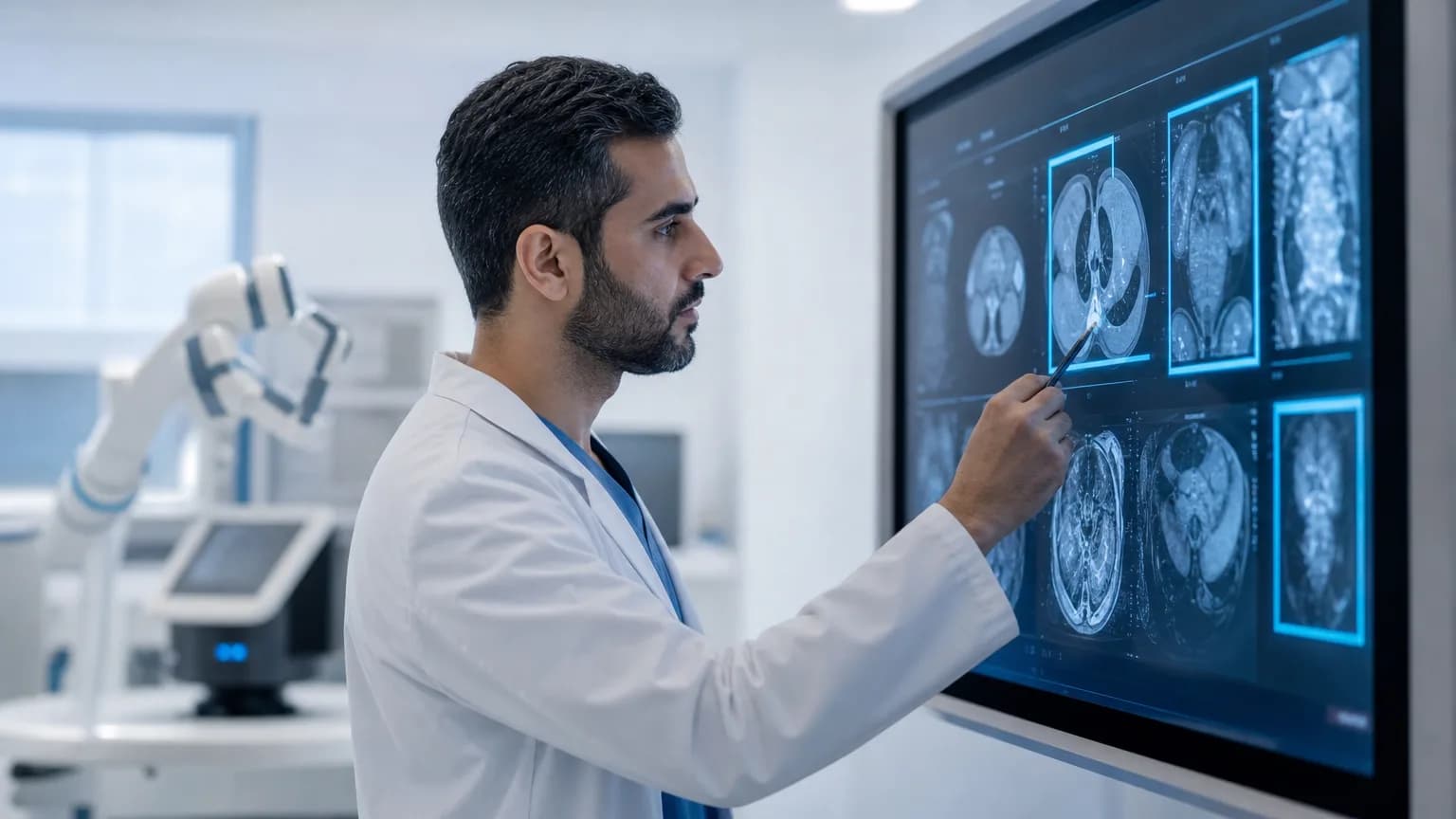
Hospitals in several Arab countries, including the United Arab Emirates and Saudi Arabia, have begun trialing artificial intelligence (AI) systems in medical imaging and early screening, part of a global wave of adopting the technology as a support tool for doctors. However, a review of the announcements and initiatives made public so far shows that much of what is being presented remains projects in the launch phase or early trials, not necessarily systems officially approved for routine clinical use.
Where is AI actually being used today?
Reports indicate that hospitals in the UAE and Saudi Arabia have started testing global systems such as PathAI and Zebra Medical, two platforms specializing in analyzing medical images using machine learning techniques.
In Saudi Arabia, King Faisal Specialist Hospital announced, in a statement dated June 2026, that it is using AI to support the analysis of chest, brain, and breast imaging, as well as to assist in diagnosing cerebrovascular strokes.
In the UAE, Al Qasimi Hospital announced in November 2025 a set of projects scheduled to launch during 2026. These include using AI to help diagnose Alzheimer's disease, Parkinson's disease, and strokes, in addition to liver disease, cholesterol-related conditions, and thyroid disorders. The hospital also announced a device for early disease detection through AI-based analysis of eye scans.
It is worth noting that this information is based on official announcements from the institutions themselves, not on independent oversight reports or published operational data documenting the actual performance of these systems in day-to-day clinical settings.
What do studies say about accuracy compared with doctors?
Despite growing interest, no recent published studies (within the past few months) were found that directly and explicitly compare the accuracy of AI systems with the performance of doctors specifically within Arab hospitals.
One study, published in February 2026 in the Journal of Pioneering Medical Sciences under the title "The Role of Artificial Intelligence in Improving Diagnostic Radiology in Saudi Arabia," is available, but the sources reviewed did not provide details of its results or specific figures on the accuracy achieved by the systems studied compared with human diagnosis.
This gap in published local scientific evidence makes it currently difficult to confirm how reliable these systems are within the Arab context specifically, even though broader international studies in other fields have examined AI performance in medical imaging.
Where do regulators stand?
On the regulatory front, the UAE, Saudi Arabia, and Qatar are among the countries described as global leaders in establishing governance frameworks and laws specific to AI in the healthcare sector.
In the UAE, the Dubai Health Authority launched a dedicated AI in healthcare policy in August 2021, requiring medical entities to comply with international, federal, and local standards. The policy emphasizes patient safety, transparency, accountability, and privacy protection, alongside the need for continuous human oversight. It states that AI systems must serve as tools supporting clinical decisions rather than replacing them, and that they must undergo independent verification and risk assessment, with clear disclosure of their functions and limitations.
In Saudi Arabia, the Saudi Data and Artificial Intelligence Authority (SDAIA) issued AI ethics principles in 2022 that apply to the private sector, government entities, and nonprofit organizations. The principles classify health records, along with genetic and ethnic data, as "sensitive" information requiring additional protection. Saudi Arabia has also designated 2026 as the "Year of Artificial Intelligence," under SDAIA's supervision, signaling growing official attention to the issue.
The limits of the evidence and a necessary distinction
Observers generally agree that AI, in its current state, is not a substitute for doctors but rather a supporting tool, with the final medical decision and human interaction with patients remaining the responsibility of human medical staff.
It is important here to distinguish between what has been officially approved for actual clinical use and what remains in the experimental or research stage. So far, no official published lists have been found that precisely identify devices or software actually approved for routine clinical use in Arab hospitals. Most sources refer to "projects in the launch phase" and "trials" rather than to completed, documented regulatory approvals.
Based on this, the overall picture of AI use in medical diagnostics at Arab hospitals remains largely dependent on the institutions' own announcements, rather than on independent oversight reports or published clinical data documenting actual results on the ground.
WAKIB Editorial Team
This review was prepared and summarized by the WAKIB AI intelligence engine and vetted by our editorial board for accuracy and reliability.
Subscribe to Newsletter
Get a weekly summary of the most promising AI research and tools delivered to your inbox.
Telegram Channel
Join our active community on Telegram for real-time tracking of AI models and trends.