
DeepMind's hurricane AI cuts track error by 140 kilometers
The Core · TL;DR
- Google DeepMind's WeatherNext Cyclones model cut five-day hurricane track error to 230 km, versus 370 km for ECMWF's ENS system and 335 km for DeepMind's own GenCast
- The peer-reviewed study, accepted by Nature, involved researchers from Google Research, NOAA's National Hurricane Center, Colorado State University, and the U.K. Met Office
- WN-C forecasts up to 15 days ahead and generates up to 1,000 storm scenarios to help quantify uncertainty
- At three days, the model beat NOAA's HAFS intensity forecasts by an average of 3.75 knots
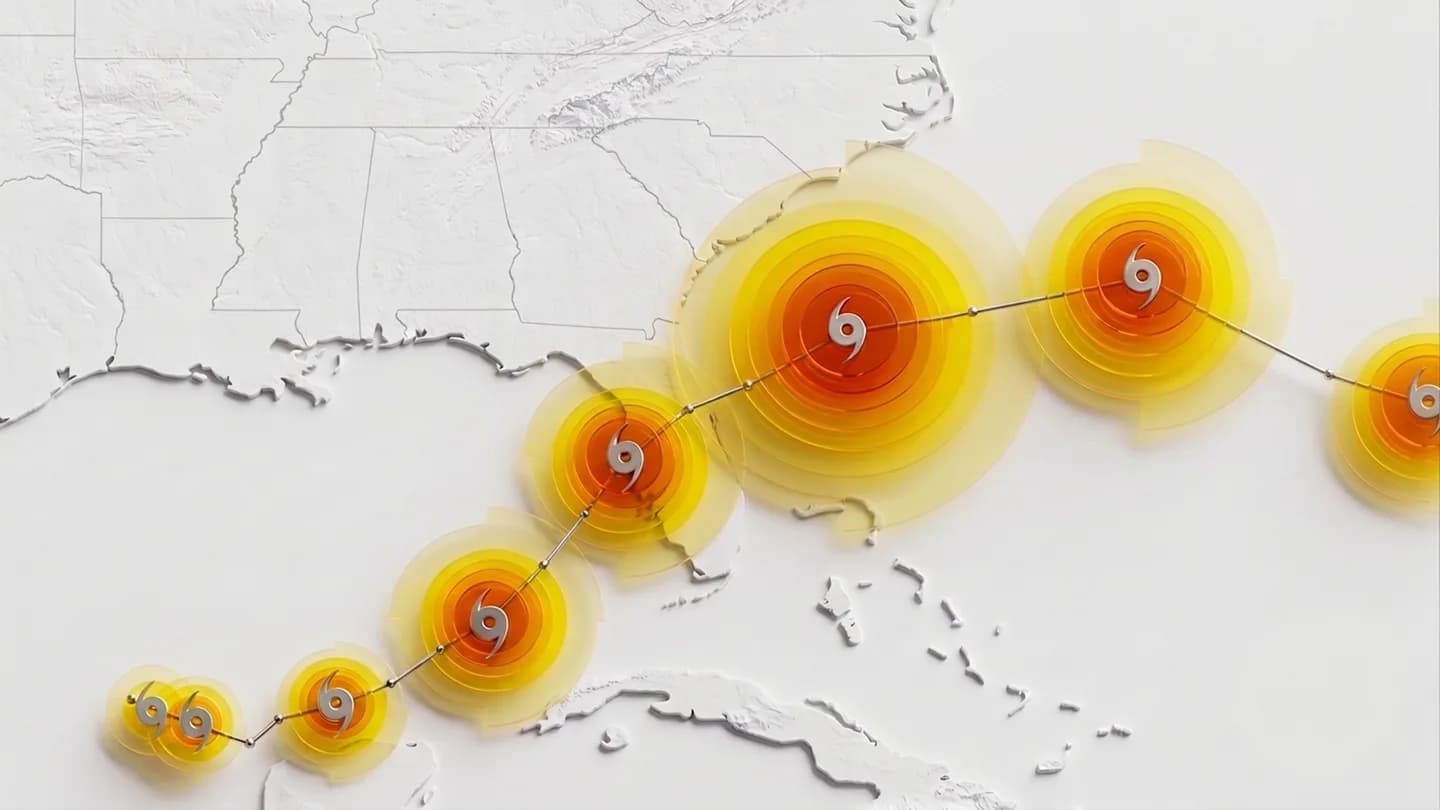
A five-day hurricane forecast that misses by 230 kilometers instead of 370 can be the difference between an evacuation order for the right coastline and the wrong one. That is the gap Google DeepMind says its new model, WeatherNext Cyclones (WN-C), has closed against the European Centre for Medium-Range Weather Forecasts' ensemble system, one of the operational standards meteorologists rely on today.
The results appear in a peer-reviewed study accepted by Nature, produced with scientists from Google Research, the U.S. National Hurricane Center, Colorado State University, and the U.K. Met Office. Researchers tested the model against tropical cyclones recorded between 2023 and 2025.
WN-C also improved on DeepMind's own prior weather model, GenCast, which posted a 335-kilometer average track error at the five-day mark. On intensity, the new model beat NOAA's Hurricane Analysis and Forecast System by an average of 3.75 knots at a three-day horizon, a meaningful margin for agencies deciding how much storm surge and wind damage to plan for.
Longer lead times, more scenarios
Beyond raw accuracy, WN-C extends useful forecasts out to 15 days and can generate up to 1,000 simulated storm scenarios per event. That ensemble approach lets forecasters see a spread of plausible tracks and intensities rather than a single projected path, which is closer to how uncertainty is actually communicated in emergency planning.
The paper frames the lead-time gain, more than a full day of advance warning compared with leading operational systems, as the practical payoff of the accuracy improvement. Earlier warnings give coastal authorities more time to stage resources and issue evacuation notices before landfall.
The stakes behind the benchmark numbers are large. Tropical cyclones have caused more than 700,000 deaths and an estimated $1.4 trillion in economic losses worldwide over the past five decades, according to figures cited in the study.
Peer review by Nature gives the claims more weight than a typical corporate benchmark release, since the methodology and comparisons against ECMWF's ENS and NOAA's HAFS were subject to independent scrutiny. Whether national weather agencies adopt WN-C operationally, and how it performs on cyclones outside its 2023-2025 test window, will determine if the accuracy gains reported in the paper translate into faster real-world warnings.
Original reporting and research used to synthesize this article.
WAKIB Editorial Team
This review was prepared and summarized by the WAKIB AI intelligence engine and vetted by our editorial board for accuracy and reliability.
Subscribe to Newsletter
Get a weekly summary of the most promising AI research and tools delivered to your inbox.
Telegram Channel
Join our active community on Telegram for real-time tracking of AI models and trends.