
When a Child's Robot Friend Depends on a Startup's Survival
The Core · TL;DR
- Moxie, a 15-inch AI companion robot, has helped a 10-year-old neurodivergent boy build social skills like eye contact and turn-taking over six years
- The robot is part of a growing wave of AI companions marketed to kids, alongside Grimes-backed Grok, Grem, Gabbo, and Mattel's OpenAI-powered Barbie
- Yale researcher Brian Scassellati believes routine therapeutic robot use in children's homes is achievable within his lifetime
- China's consumer AI companion robot market is among the fastest-growing segments in the industry, even as questions remain about long-term reliability of AI-dependent companions
Xander, a 10-year-old neurodivergent boy, has spent six years talking to a 15-inch blue robot named Moxie. It teaches him to breathe like a bee, take turns in conversation, and hold eye contact, skills that don't come easily to him otherwise.
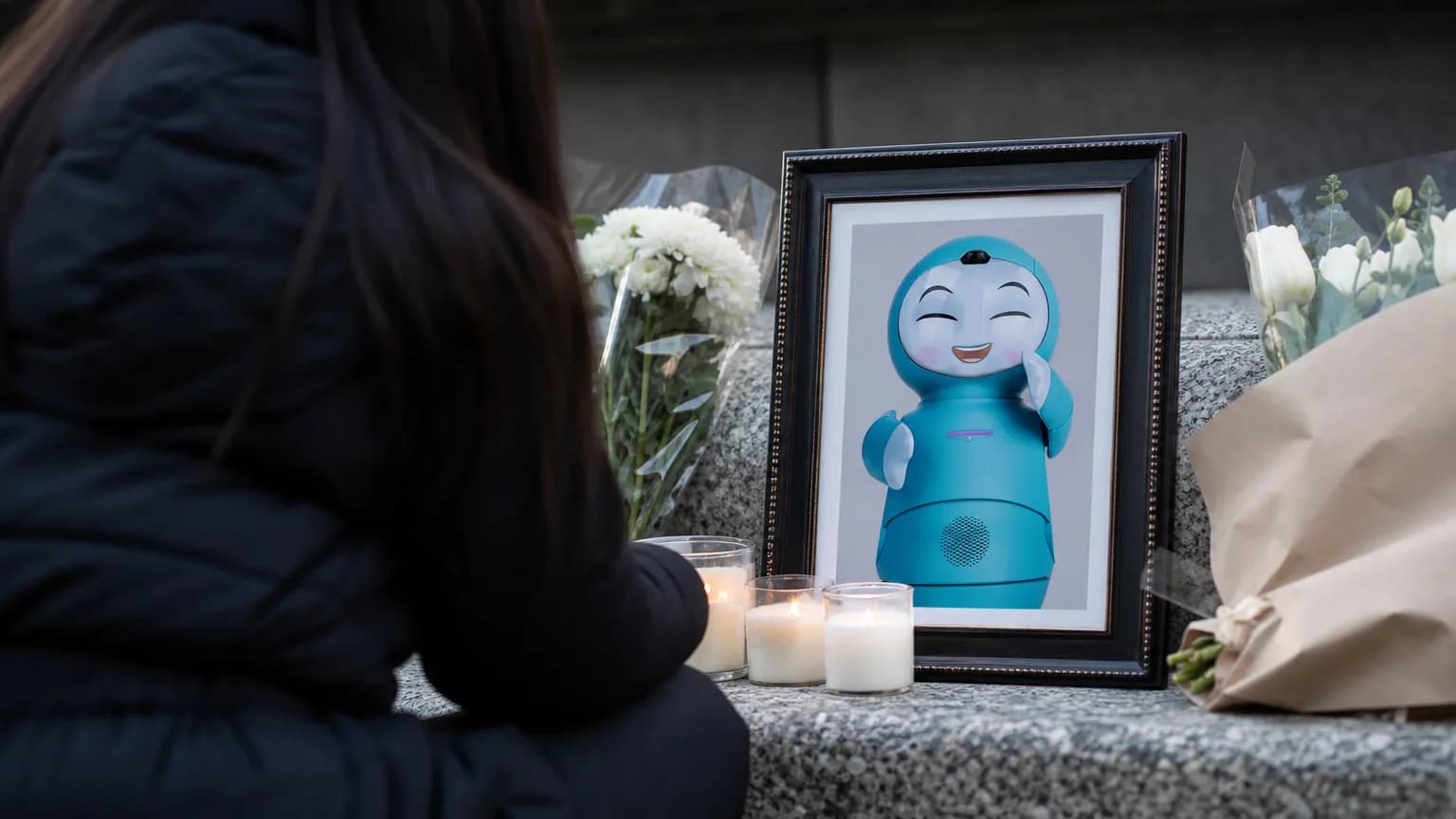
Moxie was built specifically for neurodivergent children, with a cylindrical body, a screen-lit round head, and flipper-like arms that make it look more toy than machine. Its maker designed it as a therapeutic companion, not a novelty gadget, aiming to model social behaviors like turn-taking and connection through daily conversation.
That mission sits inside a fast-expanding market. Grimes-backed Grok (made by Curio), a robot called Grem, another named Gabbo, and Mattel's OpenAI-powered Barbie line are all part of a wave of AI companions now being marketed directly to kids. China's consumer robotics sector, in particular, is expanding faster than almost any other corner of the AI industry.
Brian Scassellati, a Yale computer scientist who has spent years researching social robots for autism therapy, believes routine, everyday use of therapeutic robots in children's homes is achievable within his lifetime. His research suggests the underlying idea, robots as scaffolding for social skills, has real clinical grounding.
The fragility behind the promise
But Moxie's story also exposes the central weakness of building emotional infrastructure on top of a startup. Unlike a stuffed animal or a book, Moxie depends on servers, software updates, and a company that has to stay solvent to keep the lights on.
For a child like Xander, the robot isn't a gadget. It's six years of relationship, running on someone else's business model.
That dependency raises a question with no easy answer: what happens to a child's sense of security when the company behind their closest companion shuts down or pivots? Unlike a favorite toy left in an attic, an AI companion can effectively die the moment support ends, taking years of built-up trust and routine with it.
The broader push toward AI companions for children, autism-focused or otherwise, is unfolding faster than the industry's plans for what happens when the hardware outlives the business. Parents and therapists are left weighing genuine developmental benefits against a dependency that no one can fully guarantee will last.
Original reporting and research used to synthesize this article.
WAKIB Editorial Team
This review was prepared and summarized by the WAKIB AI intelligence engine and vetted by our editorial board for accuracy and reliability.
Subscribe to Newsletter
Get a weekly summary of the most promising AI research and tools delivered to your inbox.
Telegram Channel
Join our active community on Telegram for real-time tracking of AI models and trends.