
Washington Weighs Sanctions on Chinese AI Models as Kimi K3 Rattles US Labs
The Core · TL;DR
- Treasury Secretary Scott Bessent said the US will scrutinize Chinese open-source AI models for IP theft and may impose sanctions, while insisting the administration still supports open source broadly.
- The threat comes as Moonshot AI's Kimi K3 gains ground on capability and cost, pressuring the business models of OpenAI and Anthropic.
- Microsoft's Satya Nadella and Hugging Face's Clem Delangue publicly disputed the idea that model distillation constitutes theft, noting US firms use the same techniques.
- Commerce, the NSA, and the White House have reportedly weighed sanctions lists, security warnings, and executive orders since 2025, with Kimi K3's release and White House personnel shifts reviving momentum for tighter restrictions.
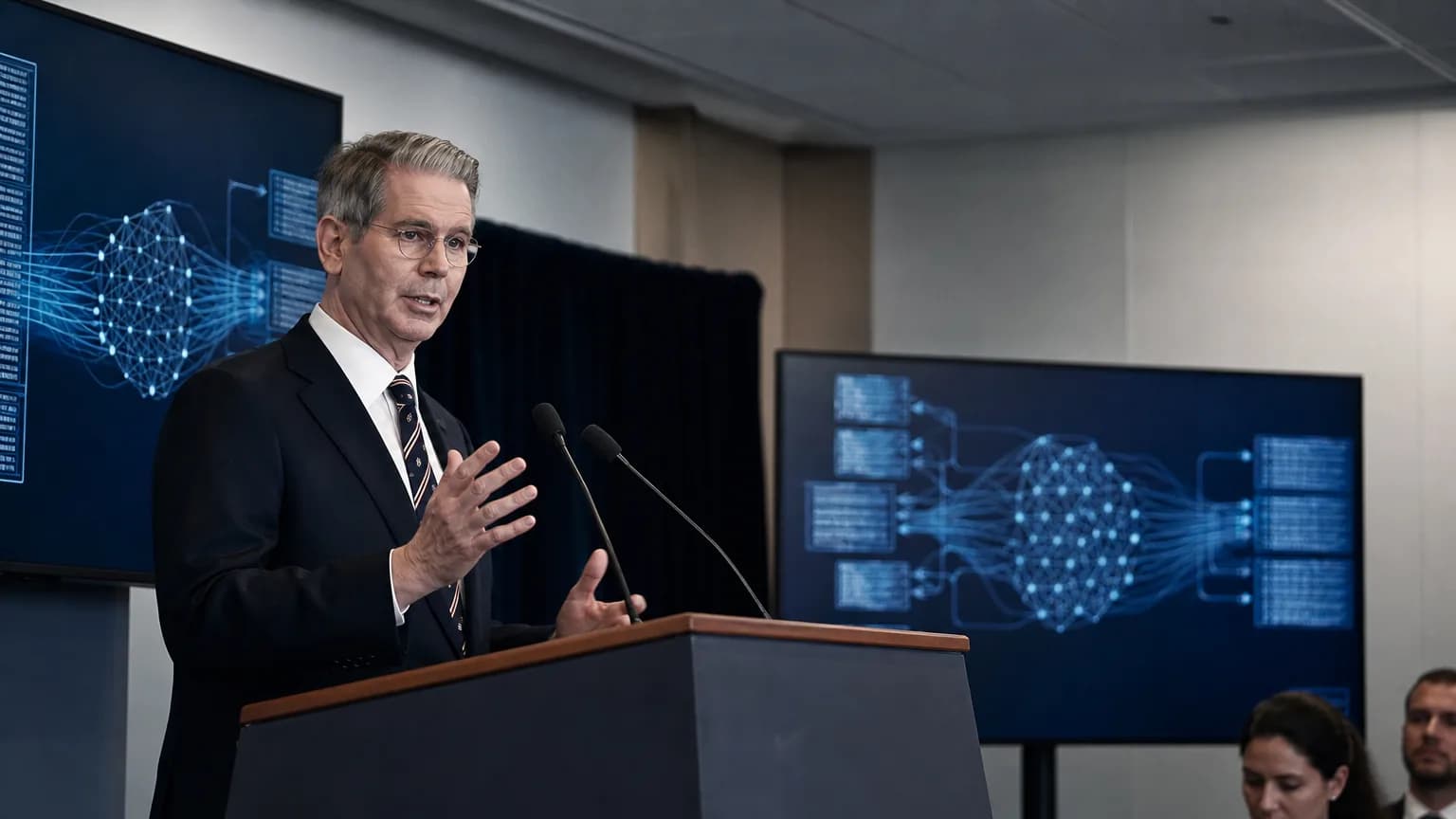
Treasury Secretary Scott Bessent used a Fox Business appearance this week to put Chinese AI developers on notice, saying the Trump administration would examine open-source models from China for evidence of intellectual property theft and would not hesitate to impose sanctions if it found any. His remarks confirm what had been circulating as speculation for months: that Washington is building a policy response to the rapid rise of Chinese open-weight models, chief among them Moonshot AI's Kimi K3, which has drawn attention for closing the capability gap with leading American systems at a fraction of the cost.
Bessent was careful to frame the administration's position as supportive of open source in principle. The objection, he said, is theft, not openness itself. That distinction matters because it lands in the middle of an unresolved industry argument over what counts as theft in the first place. Microsoft CEO Satya Nadella pushed back publicly on the premise that distilling a rival's model amounts to IP infringement, arguing that while AI companies deserve fair-use protections for training on public data, they have no standing to restrict how their own outputs get used downstream. Hugging Face CEO Clem Delangue went further, calling distillation a minor ingredient in building strong models and noting that American labs rely on the same technique.
A Slow-Building Regulatory Push
According to reporting on the administration's internal deliberations, the Commerce Department began drafting rules to shield domestic AI supply chains from Chinese open-source competition as early as summer 2025, only to see those efforts shelved by advisers who preferred a lighter touch. Since then, Commerce, the NSA, and the White House have reportedly kept multiple options on the table, from adding Chinese labs to sanctions lists to issuing security advisories to drafting an executive order that would saddle US companies hosting Chinese models with new liability requirements. Axios reported Monday that a full ban on Chinese open-source models is under consideration, though other sources close to the discussions have disputed that characterization, describing the effort as narrower and still in flux.
Two developments appear to have shifted the internal balance back toward tighter restrictions: Kimi K3's release and a round of White House personnel changes that strengthened the hand of officials pushing for a harder line. OpenAI strategist Dean W. Ball has described the likely near-term approach as a "FUD" strategy, using soft guidance and public warnings to discourage adoption of Chinese models without enacting binding law.
The stakes are commercial as much as geopolitical. US companies have been adopting Chinese open-source models precisely because they are cheap and nearly as capable as domestic alternatives, a dynamic that threatens the pricing power of firms like OpenAI and Anthropic. The irony is not lost on critics: Anthropic itself just won court approval to begin paying authors under a $1.5 billion settlement after a judge found it had illegally copied millions of books to train its own models, a reminder that IP disputes in AI cut in more than one direction.
Original reporting and research used to synthesize this article.
WAKIB Editorial Team
This review was prepared and summarized by the WAKIB AI intelligence engine and vetted by our editorial board for accuracy and reliability.
Subscribe to Newsletter
Get a weekly summary of the most promising AI research and tools delivered to your inbox.
Telegram Channel
Join our active community on Telegram for real-time tracking of AI models and trends.