
OpenAI to cut off Cursor after SpaceX's $60B acquisition
wired.com · Publisher photograph, editorial use approved
The Core · TL;DR
- OpenAI will terminate its partnership with Cursor on November 12, 2026, following SpaceX's $60 billion acquisition of Cursor's parent, Anysphere.
- OpenAI cited distrust of Elon Musk's companies honoring contracts as the reason, despite Cursor generating over $1 billion in projected annualized revenue for OpenAI.
- Cursor CEO Michael Truell, now leading teams at SpaceX, says OpenAI models power only about 5% of Cursor's traffic, downplaying the impact.
- OpenAI reportedly earns over $40 billion annually from ChatGPT, ads, and Codex, dwarfing the revenue it stands to lose from Cursor.
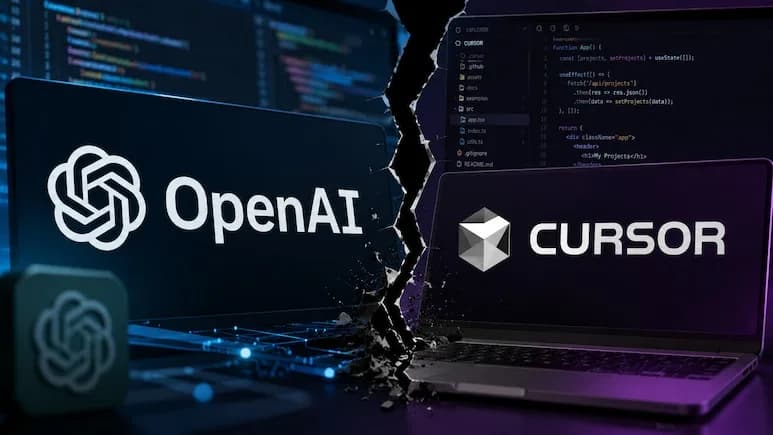
OpenAI will end its commercial partnership with Cursor on November 12, 2026, closing off access for a customer that had become one of its most lucrative accounts. The decision follows SpaceX's $60 billion acquisition of Cursor's parent company, Anysphere, and OpenAI's stated distrust of Elon Musk's business dealings.
The announcement came in a blog post published late Friday night, a timing that itself suggested a company trying to manage the fallout of walking away from serious money. OpenAI said plainly it could not trust SpaceX to respect its terms of service.
"We are making this choice because we cannot be confident that SpaceX will use our technology within our terms of service, based on our experience with Elon Musk's companies violating contracts."
The financial stakes are significant. Cursor ranked among OpenAI's top five customers by revenue at the start of 2026, and by spring OpenAI was projecting the account would generate more than $1 billion in annualized revenue.
Cursor founder and CEO Michael Truell, who is now leading teams inside SpaceX following the acquisition, pushed back on how much OpenAI's cutoff will actually hurt his product. He said OpenAI's models handle only about 5% of the traffic running through Cursor, implying the coding tool is far less dependent on OpenAI than the revenue figures might suggest.
That gap between OpenAI's dollar exposure and its share of Cursor's actual usage is worth sitting with. It suggests OpenAI was capturing outsized revenue from a relatively small slice of Cursor's total inference workload, likely tied to premium or high-compute requests rather than everyday queries.
Why OpenAI is willing to walk away
Losing a billion-dollar account would matter far more to a smaller company than it does to OpenAI, which reportedly pulls in over $40 billion in annualized revenue from ChatGPT subscriptions, in-app advertising, and its own coding product, Codex. Sacrificing Cursor also removes a potential channel for a Musk-controlled entity to route usage into OpenAI's infrastructure on terms OpenAI does not control.
The move also reads as a proxy fight in the broader rivalry between OpenAI and Musk, who has separately pursued legal action against the company. Thibault Sottiaux, OpenAI's head of core products, oversees the unit responsible for enforcing the terms of service now cited as the reason for the split.
For Cursor, the practical impact may be limited given Truell's traffic figures, but the episode signals that OpenAI is prepared to forfeit substantial revenue to avoid doing business, even indirectly, with Musk's companies.
Original reporting and research used to synthesize this article.
WAKIB Editorial Team
This review was prepared and summarized by the WAKIB AI intelligence engine and vetted by our editorial board for accuracy and reliability.
Subscribe to Newsletter
Get a weekly summary of the most promising AI research and tools delivered to your inbox.
Telegram Channel
Join our active community on Telegram for real-time tracking of AI models and trends.