
OpenAI Locks In 3.2 Gigawatts of Power for Its Georgia Megaproject, Codenamed Camellia
The Core · TL;DR
- OpenAI's 'Project Camellia' data center in Effingham County, Georgia secures a 3.2 gigawatt power deal with Georgia Power, phased in from 2028 to 2032.
- OpenAI pledges $80 million in community benefits for schools, healthcare, housing, and workforce training, plus up to $71 million in Codex credits for Georgia students.
- The company will cover all infrastructure and electric-service costs itself to prevent local electricity rate hikes, and use closed-loop cooling to limit water use.
- OpenAI expects to become Effingham County's largest taxpayer and projects thousands of construction and permanent jobs from the project.
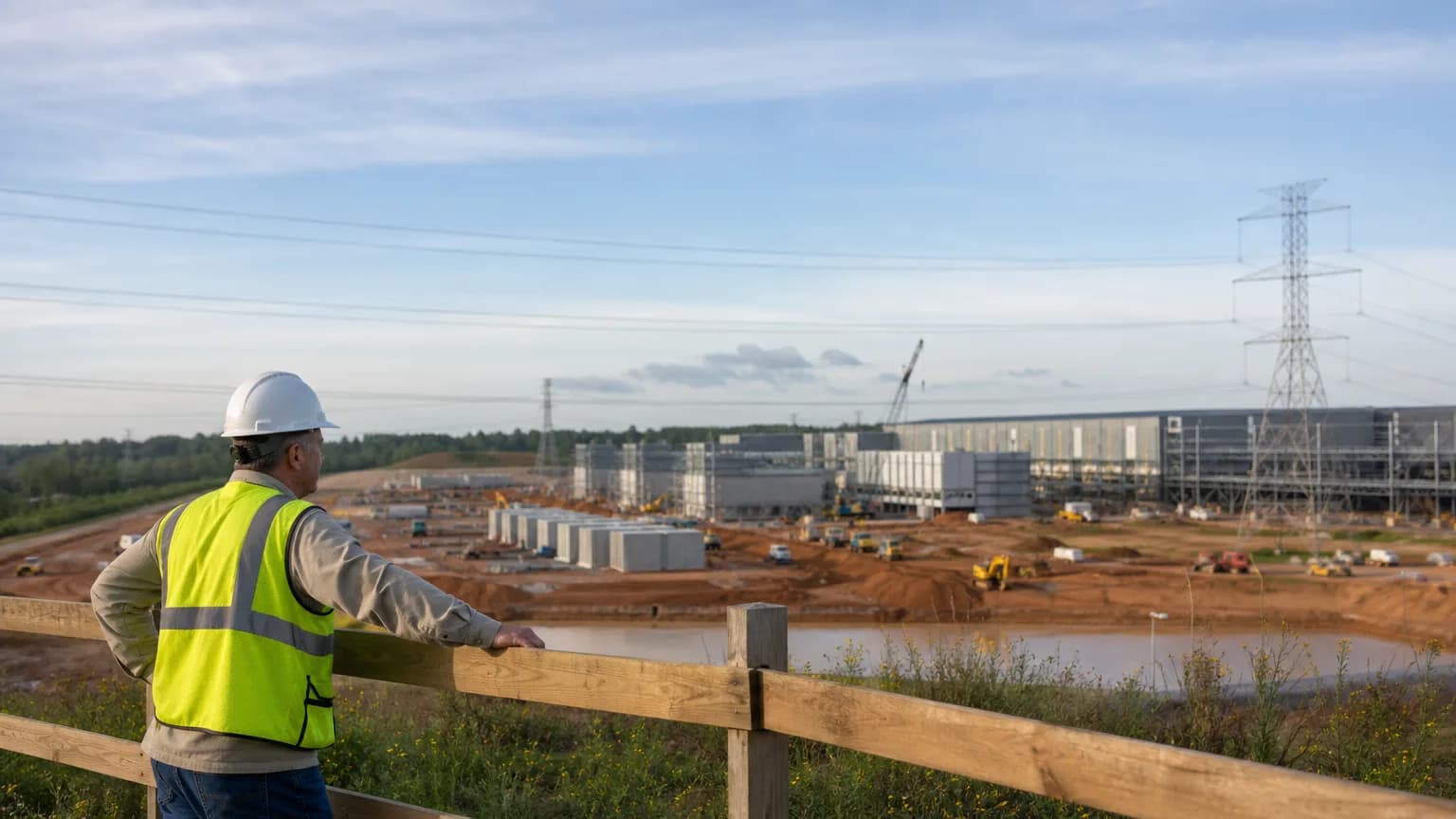
Effingham County, Georgia, is about to become home to one of OpenAI's largest physical bets yet. Dubbed "Project Camellia," the data center campus comes bundled with a power agreement that secures 3.2 gigawatts of electricity from Georgia Power, delivered in phases between 2028 and 2032. That figure puts the facility in the same league as some of the largest AI infrastructure buildouts announced anywhere in the country.
The scale of the compute buildout is only part of the story. OpenAI says it will personally cover all infrastructure and electric-service costs tied to the project, a commitment designed to insulate local residents from rate increases even as the company draws down multiple gigawatts of grid capacity. Cooling, often the thorniest environmental question surrounding hyperscale data centers, will run on a closed-loop system intended to minimize ongoing water consumption rather than drawing continuously from local supply.
Money for Schools, Students, and Small Businesses
Beyond the physical build, OpenAI is attaching a set of financial commitments to the region. The company has pledged $80 million in community benefits spread across the life of the project, aimed at schools, public safety, healthcare, utilities, workforce training, housing, veterans' services, and small business support. Separately, OpenAI is setting aside up to $71 million in Codex credits for Georgia college, community college, and technical school students, with each eligible student receiving $100 in credits to use on the company's coding-assistant tool.
That pairing is notable: one pool of money addresses civic infrastructure and social services, while the other is a direct pipeline meant to seed familiarity with OpenAI's developer tools among the state's future workforce. It's a pattern increasingly common among AI infrastructure deals, where companies pair hard capital investment with softer, talent-pipeline incentives.
Tax Base and Jobs
OpenAI projects it will become the largest taxpayer in Effingham County once Project Camellia is operational, contributing what it describes as hundreds of millions of dollars in state and local tax revenue over time. The company also expects the buildout to generate thousands of jobs, spanning both the construction phase and permanent on-site operations once the facility comes online.
For a rural Georgia county, that combination of tax revenue, job creation, and community funding represents a significant economic shift, though it also raises the now-familiar tension surrounding AI infrastructure projects: enormous energy draw paired against local promises of low-impact water use and stable electricity pricing. Georgia Power's willingness to commit 3.2 gigawatts through 2032 suggests confidence that the utility can scale supply without disrupting service to other customers, but that scaling will unfold gradually, in phases, rather than all at once.
Project Camellia adds to a fast-growing list of massive AI data center commitments nationwide, and its structure, tying direct community investment to a long-horizon power agreement, may become a template other AI labs look to replicate as they chase the electricity capacity their models increasingly demand.
Original reporting and research used to synthesize this article.
WAKIB Editorial Team
This review was prepared and summarized by the WAKIB AI intelligence engine and vetted by our editorial board for accuracy and reliability.
Subscribe to Newsletter
Get a weekly summary of the most promising AI research and tools delivered to your inbox.
Telegram Channel
Join our active community on Telegram for real-time tracking of AI models and trends.