
HUMAIN CEO Tareq Amin Unveils New AI Laptop Co-Developed with Qualcomm
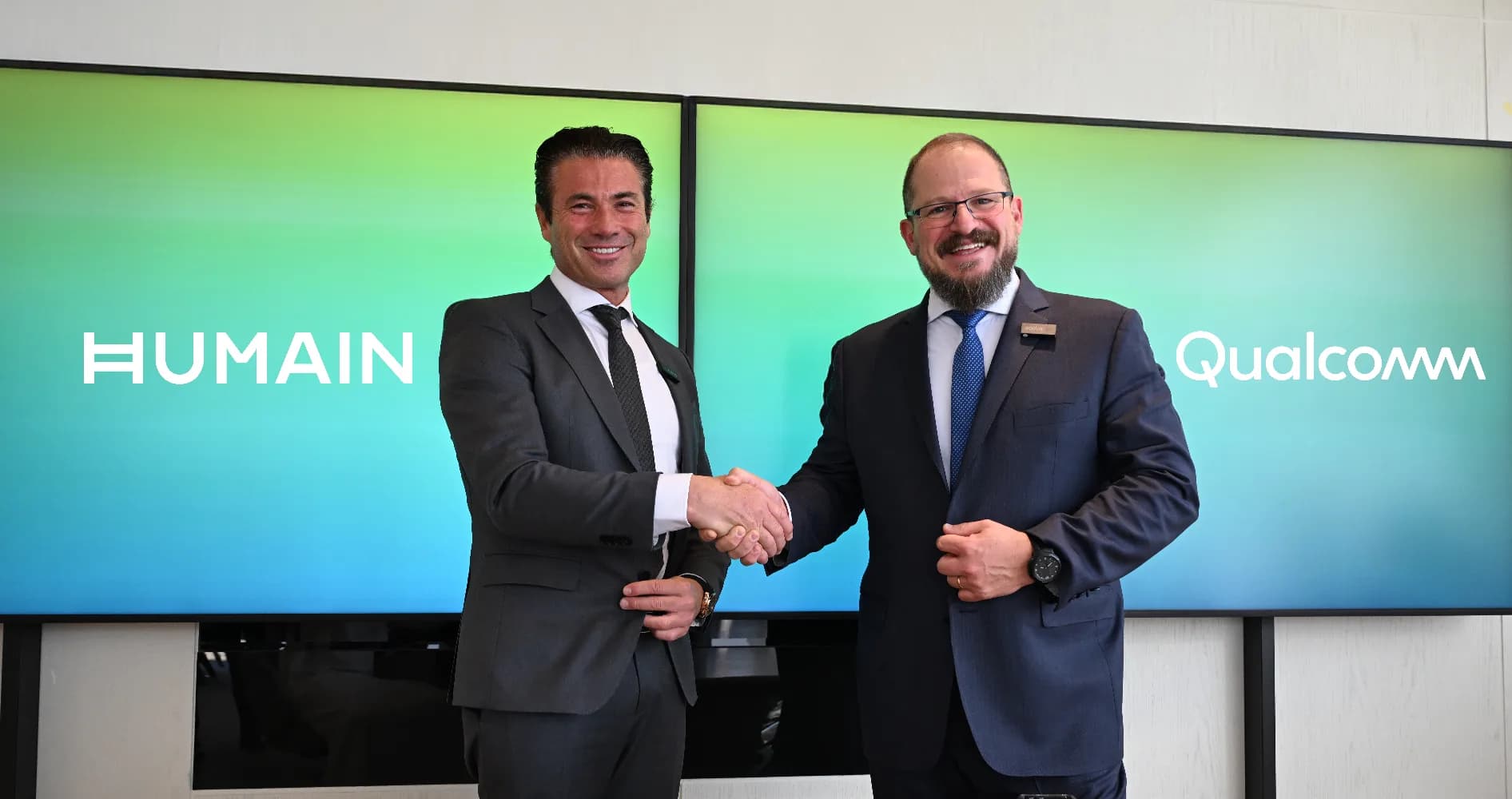
linkedin.com · Publisher photograph, editorial use approved
The Core · TL;DR
- HUMAIN and Qualcomm are jointly developing an AI PC integrating CPU, GPU, and NPU for on-device AI inference
- HUMAIN is also building a new operating system organized around user intent rather than traditional apps, aimed at an agentic AI future
- The project has reportedly been in development for about 12 months ahead of its public teaser
- Further details are expected to be revealed at the LEAP conference, though no date or venue specifics were disclosed
Saudi Arabia's HUMAIN has confirmed it is building an AI PC in partnership with Qualcomm, with a fuller reveal promised at the LEAP conference. The announcement, shared via a LinkedIn post from HUMAIN's leadership, frames the device as the centerpiece of a broader push into personal computing built around AI agents rather than traditional software.
According to the company, the project has been in development for roughly a year. That timeline suggests HUMAIN has been working on the hardware and software stack well before going public with any details, rather than reacting to recent moves elsewhere in the AI PC market.
The core technical claim is a tight integration of CPU, GPU, and NPU inside a single machine, allowing AI models to run locally rather than depending on cloud inference. Qualcomm's involvement points to an Arm-based silicon approach, aligning with the chipmaker's existing push into on-device AI processing for PCs.
An operating system built around intent
Alongside the hardware, HUMAIN says it is developing a new operating system designed specifically for what it calls an agentic AI world. Instead of navigating between discrete applications, the system is meant to be organized around a user's intent, letting AI agents interpret goals and carry out tasks across the device.
This is a notable departure from how most "AI PC" branding has worked so far, where existing operating systems have simply gained AI features bolted onto conventional app-based interfaces. HUMAIN's pitch is structural rather than cosmetic: rethinking the OS layer itself around agent-driven interaction.
HUMAIN describes the initiative as building toward "the end of limits" for personal computing, positioning the AI PC and its agentic OS as a single, integrated product rather than separate hardware and software efforts.
What remains unconfirmed
The verified details so far are limited to what HUMAIN has disclosed publicly: the Qualcomm partnership, the CPU-GPU-NPU integration, the intent-based OS concept, and the roughly 12-month development window. Pricing, release dates, specific chip models, and performance benchmarks have not been disclosed.
HUMAIN says more specifics will come at LEAP, though the source material does not specify dates or venue details for that reveal. Until then, the AI PC remains a stated ambition rather than a shipping product, with the real test being whether an intent-based OS can function reliably enough to replace the app model most users still rely on.
To follow the story, click the link
Original reporting and research used to synthesize this article.
WAKIB Editorial Team
This review was prepared and summarized by the WAKIB AI intelligence engine and vetted by our editorial board for accuracy and reliability.
Subscribe to Newsletter
Get a weekly summary of the most promising AI research and tools delivered to your inbox.
Telegram Channel
Join our active community on Telegram for real-time tracking of AI models and trends.