
Erin Brockovich Takes On AI Data Centers: Water, Land, and a Growing Grassroots Fight
The Core · TL;DR
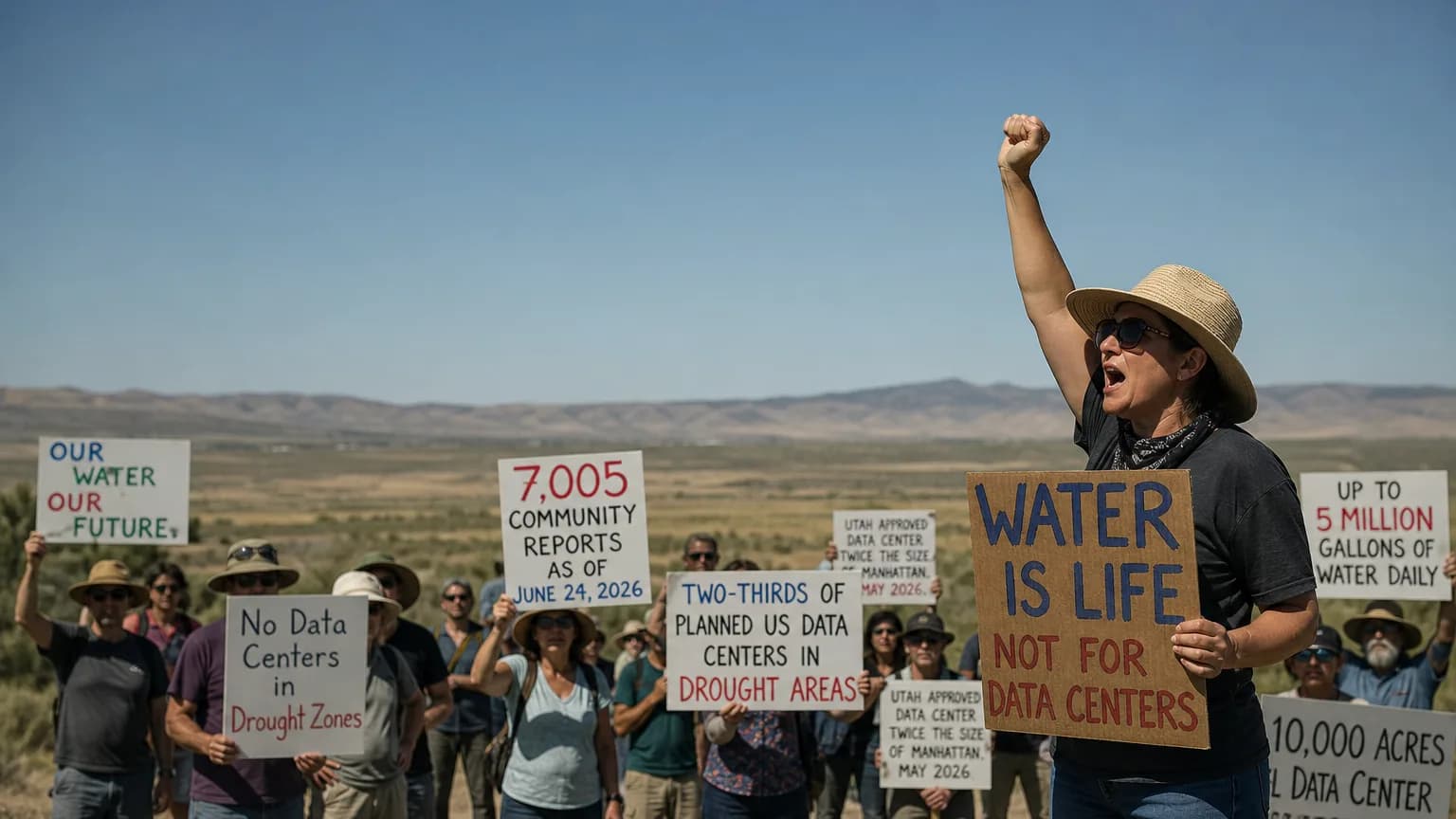
- Erin Brockovich launched a public callout in April 2026 targeting AI data center expansion, drawing 7,005 community reports by late June.
- As of June 24, 2026, the US has 33 operational, 68 under-construction, and 41 proposed AI data centers.
- Two-thirds of planned US data centers sit in drought-stricken areas; the largest can consume up to 5 million gallons of water daily.
- Utah approved a data center twice the size of Manhattan in May 2026, with another proposed facility spanning 10,000 acres.
The environmental activist who helped win a $333 million settlement against Pacific Gas and Electric over contaminated groundwater in Hinkley, California back in 1993 has a new target: the unchecked proliferation of AI data centers across the United States.
Erin Brockovich, whose legal battle against PG&E was dramatized in the 2000 film starring Julia Roberts, launched a public callout on her website in April 2026 asking Americans to share concerns about AI infrastructure being built in their communities. Within a month, 3,862 people had responded. By late June 2026, that figure had grown to 7,005 reports submitted through her online tracking form — a signal that public unease is both widespread and accelerating.
The Scale of the Buildout
The numbers behind the AI data center boom are striking. As of June 24, 2026, the US has 33 operational AI data centers, 68 under active construction, and another 41 proposed. The pace shows no sign of slowing: in May 2026, Utah approved a single data center campus twice the size of Manhattan. A separate proposed facility in the state would cover 10,000 acres.
The environmental pressure points are not abstract. Two-thirds of planned US data centers are located in drought-stricken regions, and the largest facilities can consume up to 5 million gallons of water per day for cooling systems alone. Siting these facilities in water-stressed areas raises direct questions about resource allocation that local communities are now pushing back on.
What Brockovich Is Building
Brockovich's approach mirrors the community-organizing model that defined her earlier work: collect complaints, map patterns, and build enough public pressure to force accountability. The rapid volume of responses to her April callout suggests she has identified a genuine nerve. Critics of the data center expansion argue that permitting processes have failed to adequately account for cumulative water and land impacts, particularly in western states already grappling with chronic drought.
The opposition she is organizing now faces an opponent with considerably more resources than a single utility company. The AI infrastructure buildout is backed by some of the largest technology companies in the world, with capital deployment running into the hundreds of billions of dollars. Whether grassroots pressure translates into regulatory action or legal challenges remains an open question, but the campaign has already demonstrated a capacity to aggregate public concern at speed.
Original reporting and research used to synthesize this article.
WAKIB Editorial Team
This review was prepared and summarized by the WAKIB AI intelligence engine and vetted by our editorial board for accuracy and reliability.
Subscribe to Newsletter
Get a weekly summary of the most promising AI research and tools delivered to your inbox.
Telegram Channel
Join our active community on Telegram for real-time tracking of AI models and trends.