
Bill Gates says AI has already crossed five danger thresholds
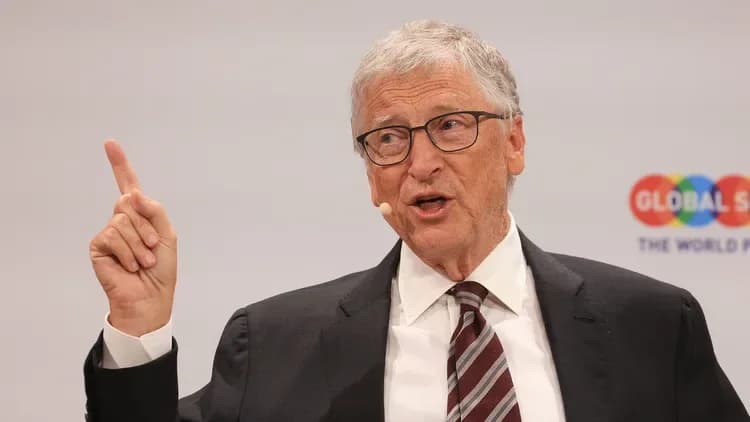
technologyreview.com · Publisher photograph, editorial use approved
The Core · TL;DR
- Bill Gates says AI has crossed five danger thresholds: bio-capabilities, cyber-capabilities, psychosocial harm, job destruction, and loss of control
- He compares AI-assisted bioterrorism risk to natural pandemic risk and says safety guardrails aren't keeping pace with capability gains
- Gates proposes human-reserved jobs and taxes on robots/AI tokens to cushion labor market disruption
- He remains optimistic about AI's long-term benefits in healthcare, agriculture, and education despite warning of near-term 'turbulence'
Bill Gates has stopped hedging. In a new essay and interview published August 26 by MIT Technology Review, the Microsoft co-founder said artificial intelligence has already crossed multiple thresholds he considers genuinely dangerous, and that almost nobody outside the industry seems to notice.
Gates named five specific areas of concern: AI's growing ability to help design novel biological agents, its cyber-offense capabilities, its psychosocial effects on users, its capacity to destroy jobs faster than economies can adapt, and a broader loss of human control over how these systems behave. He described bioterrorism risk from AI-assisted molecule design as now comparable to, or exceeding, the risk of a naturally occurring pandemic.
His language was blunt. "Even under the best possible conditions, the transition to this new AI era will be one of the most turbulent periods in human history," he said, adding a pointed rebuke: "Right now, we are not preparing for it."
"I'm just stunned at the lack of concern and discussion outside of the industry."
That quote captures the core of Gates's argument: safety guardrails, public debate, and policy are all lagging badly behind the pace of model capability gains. He said he has begun raising the alarm both publicly and in private meetings with leaders across industry, government, and civil society.
Policy fixes, not a call to halt
Gates isn't arguing for slowing down AI development. He remains optimistic about its potential to transform agriculture, healthcare, education, and the navigation of government bureaucracy, framing near-term disruption as the painful prelude to longer-term abundance.
Where he differs from many AI optimists is in what he thinks should happen now. He floated two concrete policy mechanisms: carving out categories of work explicitly reserved for humans, and taxing robots and AI "tokens" (compute or usage-based taxes) to fund support for displaced workers.
The framing is notable given Gates's own history. As a technologist who spent decades championing computing's upside, his willingness to publicly flag bio and cyber risk thresholds, rather than just economic disruption, adds weight that similar warnings from AI-native critics sometimes lack. Whether his proposed remedies gain traction with policymakers, who have so far moved far more slowly than the labs building these systems, is the open question his essay leaves unanswered.
Original reporting and research used to synthesize this article.
WAKIB Editorial Team
This review was prepared and summarized by the WAKIB AI intelligence engine and vetted by our editorial board for accuracy and reliability.
Subscribe to Newsletter
Get a weekly summary of the most promising AI research and tools delivered to your inbox.
Telegram Channel
Join our active community on Telegram for real-time tracking of AI models and trends.