
Behind the Hype: The Guardian's On-the-Ground Investigation Into AI's Datacentre Boom
The Core · TL;DR
- The Guardian's investigation found a proposed £8.2bn AI datacentre complex in rural Scotland misrepresented plans to run entirely on on-site renewable energy.
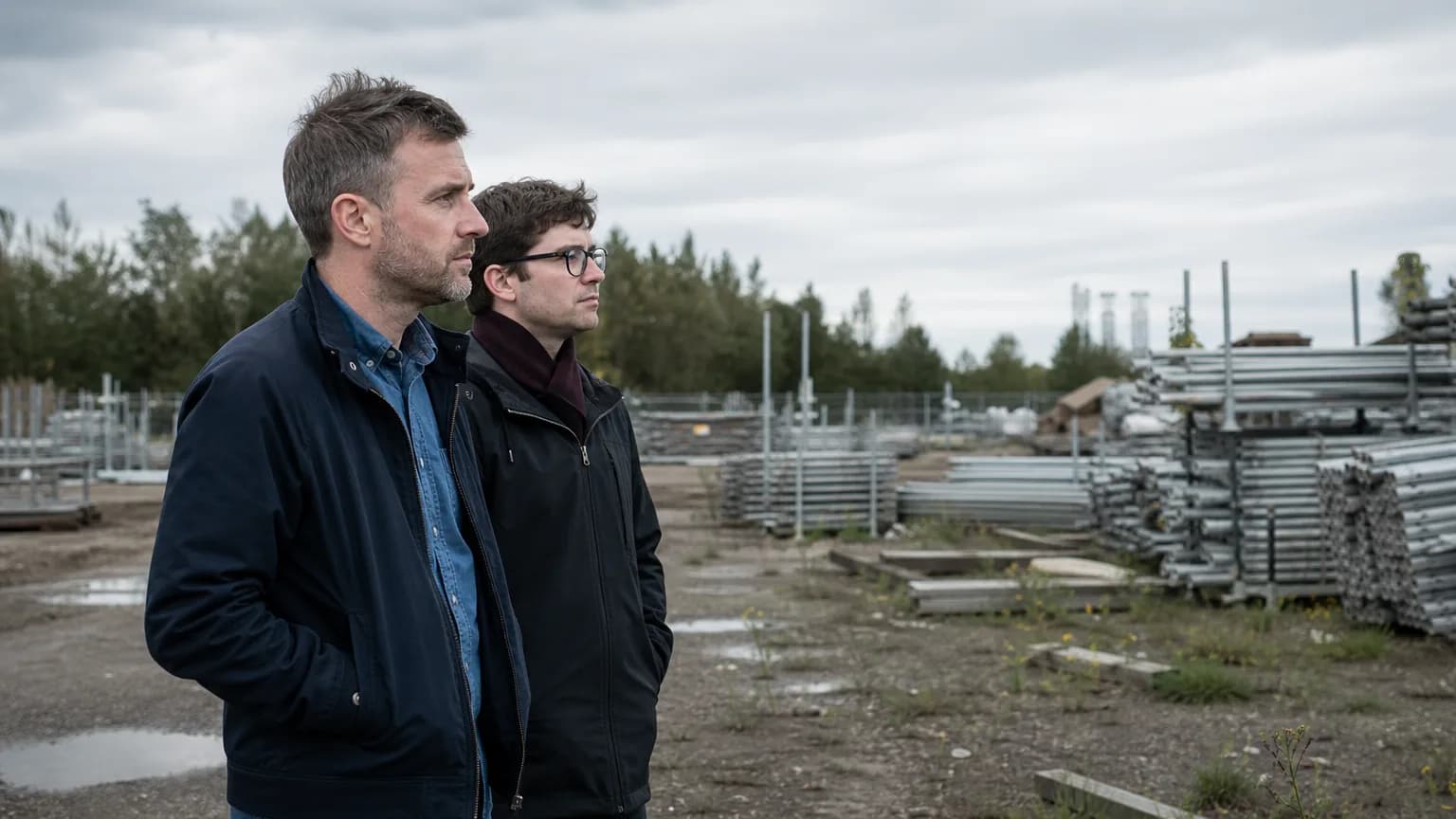
- Reporters visited a four-acre London-area site meant for an AI supercomputer complex and found it still operating as a scaffolding yard.
- Guardian editors Dan Milmo and Blake Montgomery are tracking a broader pattern of major AI datacentre projects being delayed, contested, or cancelled worldwide.
- The reporting highlights growing gaps between AI infrastructure companies' public claims on power sourcing and timelines versus verified on-site reality.
A scaffolding yard on the edge of London was supposed to be the site of an AI supercomputer complex. Instead, when Guardian reporters visited the four-acre plot, they found exactly what the land had been used for all along: stacks of scaffolding, with no trace of the promised infrastructure buildout.
That discrepancy sits at the center of a new investigative push from the Guardian into the physical realities underpinning the AI boom. The paper's global technology editor, Dan Milmo, has been tracking a wave of large datacentre projects worldwide that are being delayed, challenged by local opposition, or outright cancelled, despite the industry narrative of relentless, frictionless expansion. Blake Montgomery, the Guardian's US tech editor, frames these facilities plainly: not abstract cloud infrastructure, but sprawling, resource-hungry industrial structures with real footprints on land, water and power grids.
The most striking finding so far concerns an £8.2 billion AI complex proposed for rural Scotland. According to the investigation, developers behind the project had represented it as one that would run entirely on on-site renewable energy. Reporter Aisha Down traveled to Lanarkshire to examine the site and the surrounding energy infrastructure directly, and the reporting indicates that claim does not hold up against what's actually being built and planned there.
Taken together, these findings point to a widening gap between how AI infrastructure is marketed to investors, regulators and the public, and what is actually happening on the ground. Datacentre developers routinely lean on renewable-energy commitments and rapid-deployment timelines to secure planning approval and public goodwill. When those claims diverge from reality, the consequences ripple outward: strain on electricity grids already stretched by rising demand, uncertainty over chip supply chains tied to these builds, and a carbon footprint that may be considerably larger than advertised.
Why On-Site Verification Matters
The Guardian's approach here is notable for its method as much as its findings. Rather than relying on corporate disclosures or press materials, reporters physically visited sites in Scotland and on London's outskirts to check whether construction and operational claims matched what developers had announced. That kind of ground-truthing is increasingly necessary in a sector where announcements of gigawatt-scale campuses and multibillion-pound investments have become routine, but verification of actual progress lags far behind the press releases.
For an industry where trust in stated environmental and infrastructure commitments underpins public and regulatory support, discrepancies like a "renewable-powered" complex that isn't, or a "supercomputer site" that's still a scaffolding yard, carry weight beyond individual projects. They raise broader questions about how many of the AI infrastructure announcements dominating headlines are matched by comparable facts on the ground, and how much scrutiny those claims have actually received before reaching the public record.
Original reporting and research used to synthesize this article.
WAKIB Editorial Team
This review was prepared and summarized by the WAKIB AI intelligence engine and vetted by our editorial board for accuracy and reliability.
Subscribe to Newsletter
Get a weekly summary of the most promising AI research and tools delivered to your inbox.
Telegram Channel
Join our active community on Telegram for real-time tracking of AI models and trends.