
Anthropic's $1.5 Billion Book Piracy Settlement Gets Final Court Sign-Off
The Core · TL;DR
- Judge Araceli Martinez-Olguin granted final approval on July 21, 2026 to Anthropic's $1.5 billion settlement, the largest copyright payout in U.S. history
- The case stemmed from Anthropic downloading pirated books from Library Genesis and Pirate Library Mirror between 2021-2022; Judge Alsup ruled AI training can be fair use but piracy-based acquisition is not
- Payouts average about $3,000 per work, with roughly 91.3% of eligible authors and publishers already filing claims; source counts of affected works range between ~482,460 and 500,000
- Because it was a settlement rather than an appellate ruling, the fair-use finding sets no binding precedent, leaving similar pending cases against Google, Meta, Midjourney, and OpenAI to be decided independently
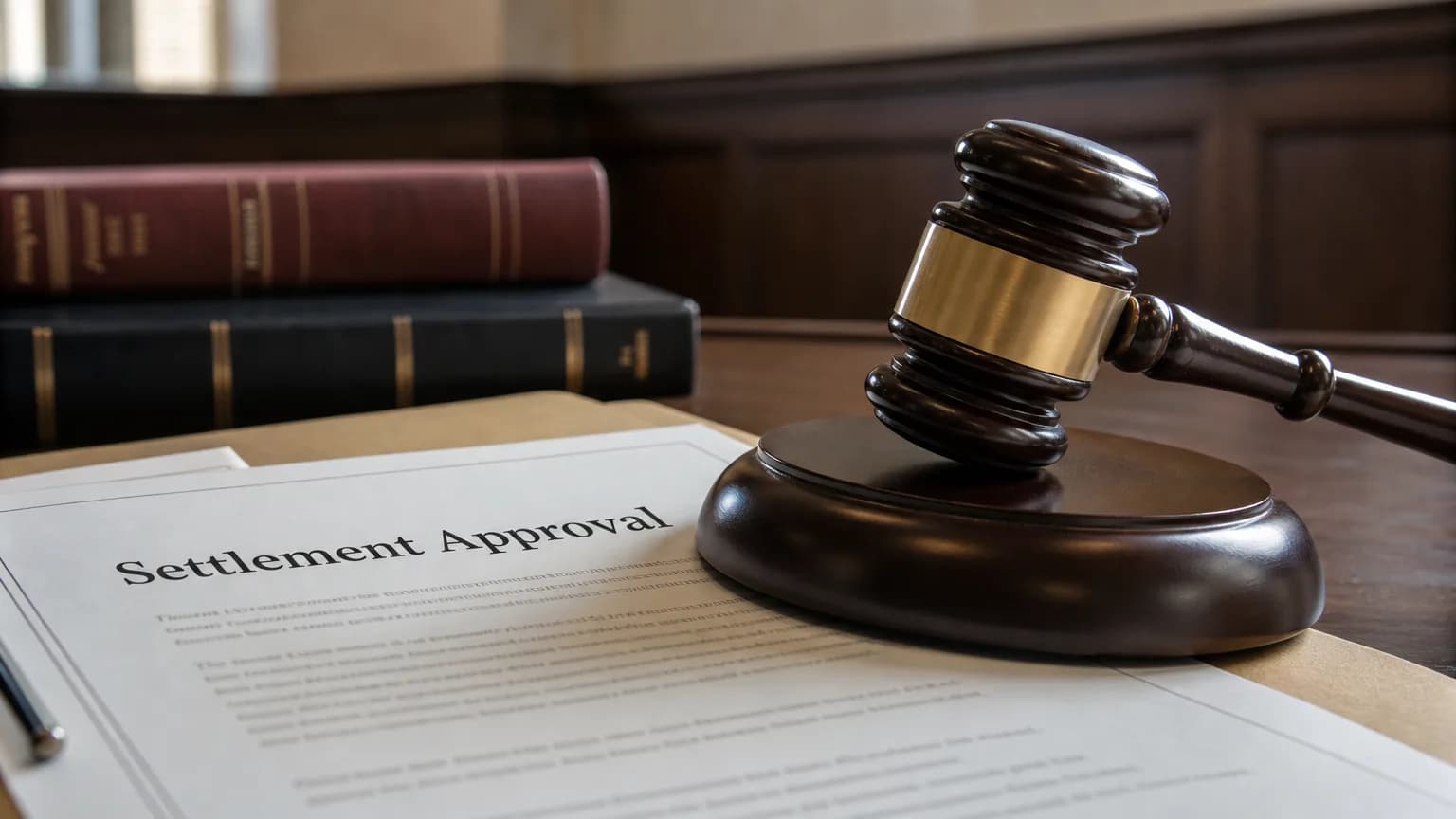
Judge Araceli Martinez-Olguin closed the book on one of AI's biggest legal fights on Monday, granting final approval to Anthropic's $1.5 billion settlement with authors and publishers over pirated training data. The figure stands as the largest copyright payout in U.S. legal history, and it resolves a case that had exposed exactly how far AI labs went to gather text for training their models.
The underlying facts were never in dispute. Judge William Alsup, who oversaw the case before retiring and handing off final approval duties to Martinez-Olguin, found that Anthropic downloaded millions of copyrighted books between 2021 and 2022 from piracy sites Library Genesis and Pirate Library Mirror. Alsup's ruling drew a sharp line: training AI models on copyrighted material can qualify as fair use, but obtaining that material through piracy does not. Facing that finding, Anthropic chose to settle rather than risk a trial on damages.
The math behind the payout works out to roughly $3,000 per affected work. Sources differ slightly on the exact count involved, with some reporting an estimated 500,000 works and others citing a more precise figure of about 482,460 works listed in the settlement, but the payment structure and scale are not in dispute. According to reporting from The Decoder and The Verge, about 91.3% of eligible authors and publishers have already filed claims to collect their share.
Money isn't the only thing Anthropic owes. The settlement requires the company to destroy the pirated files it downloaded, and it explicitly preserves authors' rights to pursue future claims, both over Anthropic's ongoing conduct and over any AI outputs that reproduce their original work. The case traces back to a 2024 lawsuit filed by authors Andrea Bartz, Charles Graeber, and Kirk Wallace Johnson, with the $1.5 billion figure agreed upon in September 2025 and given preliminary approval by Alsup before this week's final sign-off.
Why the precedent question matters
Because Anthropic settled instead of losing on appeal, Alsup's fair-use reasoning carries no binding weight over other companies. That distinction matters enormously right now. Google, Meta, Midjourney, and OpenAI are all fighting similar copyright claims, and none of them are bound by what happened in this case. Google in particular faces a fresh class action from publishers Hachette, Cengage, and Elsevier, along with author Scott Turow, alleging its Gemini models were trained on copyrighted works without permission.
The Anthropic settlement offers a clear signal of financial exposure for AI companies caught using pirated sources, even as it leaves the core legal question, whether AI training itself infringes copyright, unresolved for the industry at large. Every other pending case will have to litigate that question on its own terms.
Original reporting and research used to synthesize this article.
- 1Anthropic's $1.5B piracy settlement with book authors is a record loss that hands AI labs their biggest legal winthe-decoder.com
- 2Anthropic’s $1.5 billion book piracy settlement approved by judgetheverge.com
- 3Anthropic’s landmark $1.5B copyright settlement is approvedtechcrunch.com
- 4Judge Grants Final Approval of Anthropic’s $1.5B Copyright Settlement With Authors and Publisherstheaiinsider.tech
WAKIB Editorial Team
This review was prepared and summarized by the WAKIB AI intelligence engine and vetted by our editorial board for accuracy and reliability.
Subscribe to Newsletter
Get a weekly summary of the most promising AI research and tools delivered to your inbox.
Telegram Channel
Join our active community on Telegram for real-time tracking of AI models and trends.