
Agentic Loops Reshape AI Development: Continuous Code Evolution at Scale
The Core · TL;DR
- Boris Cherny announced that AI 'loops' represent a significant advancement in AI development, enabling autonomous code generation and refinement.
- Agentic loops involve multiple AI agents interacting continuously, with one improving architecture and another unifying abstractions, operating in a perpetual cycle.
- These loops differ from classic recursion by employing non-deterministic logic where a subagent dictates the stopping condition, exemplified by the 'Ralph Loop' for self-assessment.
- While powerful, agentic loops consume tokens at an extremely high rate, implying substantial and potentially uncapped computational costs for continuous operation.
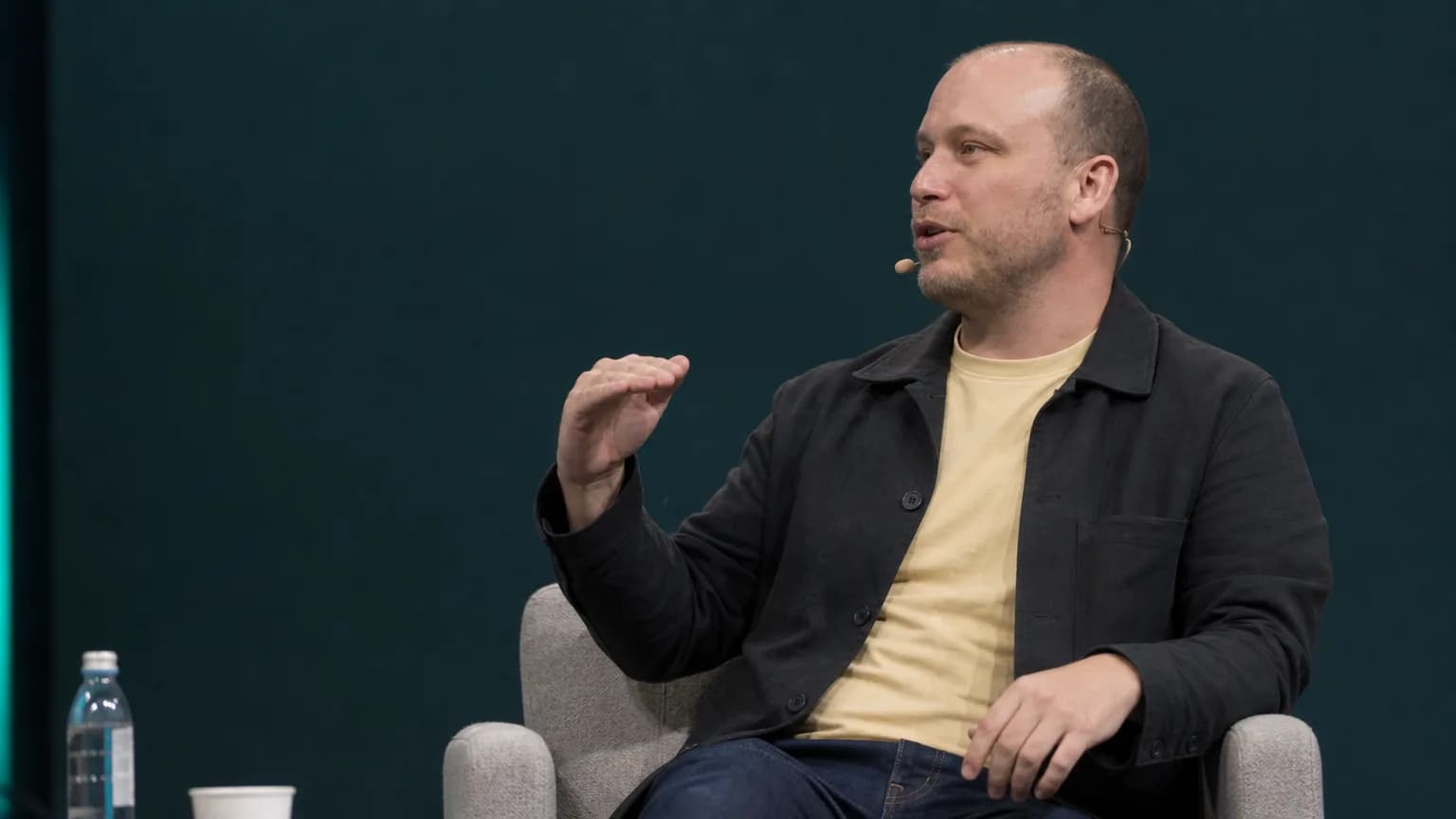
At Meta's @Scale conference, Boris Cherny, the creator of Claude Code, declared that AI 'loops' are fundamentally transforming the landscape of AI development, heralding a new era of autonomous code generation and refinement. This advancement marks a significant evolutionary step beyond traditional agent-driven coding.
The Evolution of Automated Code Generation
The trajectory of code writing has evolved rapidly. What began as manual human input transitioned to single AI agents capable of generating code. The latest paradigm now involves agent-prompted agents, creating recursive loops where AI entities continuously interact to produce and improve software. Cherny's implementation exemplifies this, featuring one AI agent dedicated to perpetually enhancing code architecture, while another actively identifies and unifies duplicated abstractions. These agents operate in a continuous cycle, submitting pull requests and running indefinitely to refine the codebase.
Distinguishing Agentic Loops from Traditional Recursion
While the concept of recursive loops, where functions call themselves until a defined stopping condition is met, is a cornerstone of computer science, agentic loops introduce a critical distinction. Unlike deterministic recursive functions, agentic loops operate on non-deterministic logic. Here, a subagent is tasked with determining the appropriate stopping condition, providing flexibility and adaptability that traditional recursion lacks. A notable technique in this domain is the 'Ralph Loop,' where an AI model periodically summarizes its work and assesses goal accomplishment, effectively mitigating issues of models becoming disoriented during prolonged operations.
Performance and Economic Implications
The power of these continuous agentic processes comes with significant computational demands. OpenAI researcher Noam Brown has observed that given sufficient compute, contemporary AI models can tackle almost any problem. However, agentic loops consume tokens at a considerably faster rate than conventional Q&A chatbots. The inherent design of continuous operation implies a potentially unbounded expenditure on tokens, posing a substantial economic consideration for organizations deploying such advanced AI systems. Developers and CTOs must weigh the transformative potential of perpetual code improvement against the escalating operational costs associated with these autonomous, looping agents.
Original reporting and research used to synthesize this article.
WAKIB Editorial Team
This review was prepared and summarized by the WAKIB AI intelligence engine and vetted by our editorial board for accuracy and reliability.
Subscribe to Newsletter
Get a weekly summary of the most promising AI research and tools delivered to your inbox.
Telegram Channel
Join our active community on Telegram for real-time tracking of AI models and trends.